
The Gift of the Feather
part of a Hopi creation story...
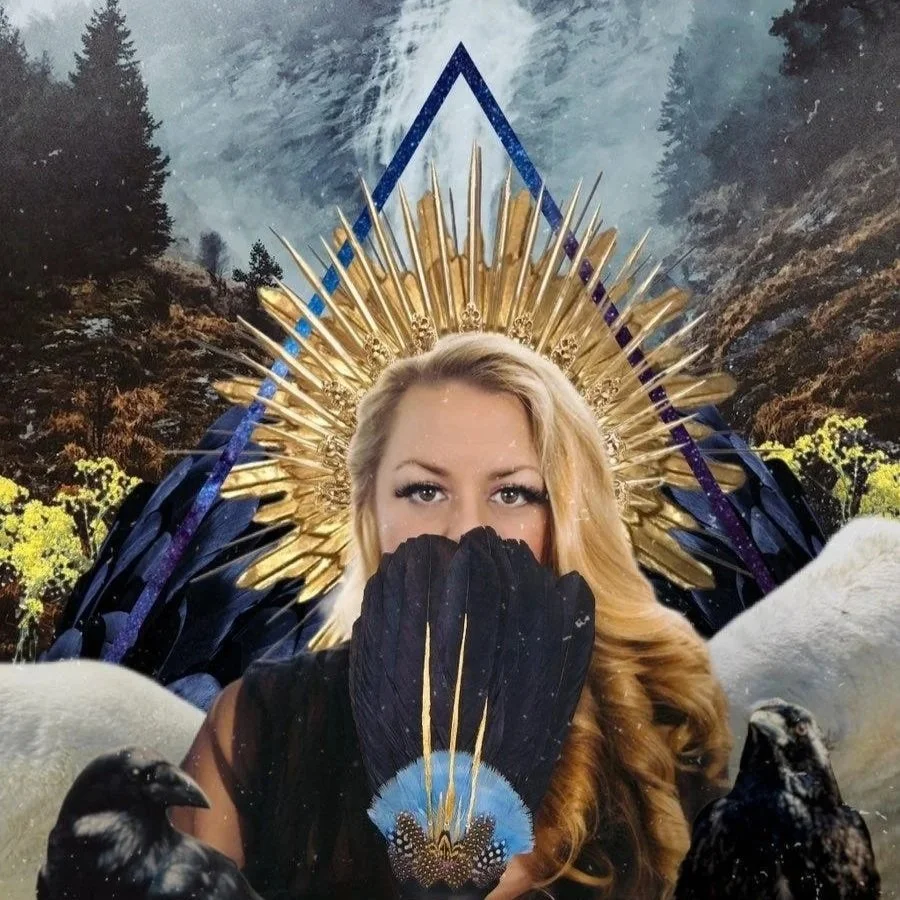
Growing up, my grandfather introduced me to myths and stories from other cultures. He also gifted my a book of essays by Benjamin Lee Whorf, the founder of linguistics. Those essays taught my young and impressionable mind that reality is shaped by language, and learning the stories of other cultures helps us as individuals to expand our awareness of the world.
The topic of The Gift of the Feather came up in conversation a couple days ago, so I thought I would share the tale with you—and maybe our awareness of the world can grow that much more, together.
Access the Voice Note Here:
This article was originally published on Substack. You can read the original here.
Audio Transcription:
The gift of the feather. What is the gift of the feather? This came up in conversation a couple days ago, so I thought I would post about it here.
Well, this is a story I learned from a Hopi elder many, many years ago, and it's based on a creation myth that, you know, long, long time ago, the original humanoid was created on this planet, created by one set of gods, let's call them. And it was a Damu, and a Damu was created to be a beast of burden, and to mine rare earth minerals, funnily enough, for the gods. Mainly gold, but certainly things, you know, diamonds, and other things that, you know, when you look around at the world you go, wow, why are humans obsessed with this? It's not like we have a use for it, or certainly it's not like we had a use for it ourselves for millions of years, right?
It's only recently that we have discovered the conductive properties of gold, and even medicinal properties, I think, of powdered white gold. So, you know, you can't eat it. Gold certainly is so soft you can't make tools out of it. You can't really build with it, so what, what purpose did we ever see for it?
Well, this is one of the explanations that way back when the original version of human was built for mining, but not mining for our needs, mining for the needs of the gods. And then one day there's another group of gods who came around and saw the plight of these beasts of burden, and I think for one reason or another the experiment wasn't quite working out with the original concept, so that the original creator gods were like, well, let's just kill them. Let's then start over. This was kind of a rough draft, and this second set of gods took mercy on us, on that creation, and said, whoa, whoa, whoa, whoa, whoa, whoa, whoa, whoa, whoa. Let's continue the experiment.
Here, we're gonna gift these critters a strand of our DNA, ooh, la-la, created in the image of the gods. There we are. And what did that strand of DNA give to us? First and foremost, it gave us volitional heat cycles. What does that mean? It means that we as humans in this current era, this current state of being, we do not need to be dependent on the heat cycles of the planet, right? So we can have sex in more seasons than just April and October, even though if you look at peak desire in humans, that is when our natural heat cycles perk up, spring and autumn, specifically April, May and October.
Volitional heat cycles means that we can basically just think about sex and be turned on and decide that we're gonna have it and then have it for pleasure and connection and whatever, not just for breeding purposes. So originally, you know, the gods were like, okay, we're doing this genetic experiment basically. And it was a big deal, like they wanted to select the humans who would breed and also when they would breed. It was, it was, we did not have free will or choice.
So that's also what the gift of the feather gave to us with this strand of godly DNA gave to us was our free will. So we get to decide our fate, essentially, we get to decide how we spend our time and what we choose to do with it. We also were gifted passion and emotion and our frontal lobe, our ability for abstract thought. And along with that, with our abilities of creation.
So the abstract thought gives us the random idea that isn't necessarily part of our daily life already. And then we get to take that thought, that idea, and we get to manifest it into the mundane, into the waking life, we get to manifest thought into reality. And that is godlike indeed, indeed, we get to philosophize.
But one thing these days that we are often forgetting that's very deeply rooted in this gift of the feather, it's very heavily connected is that emotion, our emotion is not a curse. It is a gift and it is godlike. That is the secret ingredient in your manifestation spells, in any of the spell work, the manifestation work, it's the secret sauce to feel what it feels like to have done this thing, to, you know, what is it to have the clients to have the lover to have the baby to have the house to get the Lamborghini to go sail on the yacht to go to Paris.
When we're thinking about bringing that into reality in our lives, to include the emotional body and that is where the magic happens. That is part of the gift of the feather.
And finally, what the gift of the feather brought to us is, along with that free will portion, our unruliness. My favorite is the rebel archetype. It's my favorite. We could no longer be lorded over all puns intended. Excuse me. We became ungovernable.
So after that, it took quite a bit more manipulation from the gods who would keep us in check because we were gifted the godly DNA strand that allowed us to be free agents in the world, to have our own thoughts and feelings, our own ability to enjoy pleasure and to manifest.
That is the gift of the feather.